

Optical Clinometer: WK-23-1190
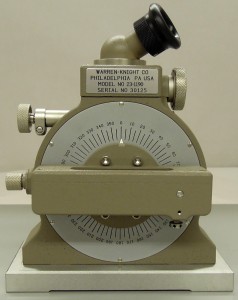
This precision inclinometer offers a full 360-degree operating range with readings available to either 10 seconds or as fine as 1 second of arc. Designed for applications requiring a high accuracy inclinometer, it is ideal for precise angle measurement, calibration, alignment, machine setting, boresighting, fire control alignment, and inspection.
The level indicator features a precision level vial mounted to a finely graduated circle, complemented by an optical micrometer with 10-second arc graduations. Unlike standard models, this surveying clinometer can be customized with an autocollimating mirror or specialized worktable for enhanced versatility.
For both vertical and horizontal applications, the instrument functions as a precision circular measuring table with an accessory base. With an available optical illumination system for enhanced internal scale visibility, this clinometer is superior to the Taylor Hobson clinometer once made, offering unmatched reliability.
Preferred by surveyors over digital inclinometers, this optical clinometer remains the top choice for professionals who demand precision, durability, and accuracy in their measurements. Warren Knight is the only remaining manufacturer of the optical inclinometer clinometers in the United States (perhaps the world).
Features:
- Angular range: 0 to 360°
- Graduation interval: 1 or 10 seconds of arc
- Can be estimated to: 2 seconds of arc
- Readings repeatable to: 5 Seconds of arc
- Maximum error between any two readings: 10 seconds of arc
- Reference faces of base flat to within: 0-.0005” (0-.013mm)
- Maximum symmetrical load when used horizontally: 5 lbs.
- Level vial sensitivity: 20 seconds per division
- Base dimensions: 6.5” x 3” (165 mm x 76 mm)
- Overall height: 8.5” (215 mm); Weight: 8.0 lbs. (3.6 kg)
Accessories: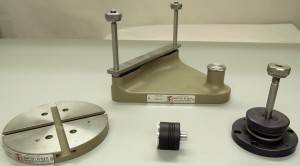
WK-23-1125: Clinometer Worktable
WK-23-1130: Auto-Collimating Mirror
WK-23-1120: Optical Clinometer Support
WK-31-1113: LED Clinometer Illuminator
A Clinometer’s Application Varies for Different Industries
An optical clinometer is use by several different industry sectors. This precision instrument measures angles of slope, elevation, or inclination. Here are the top five uses of an optical clinometer and their approximate percentage of usage:
Clinometer Applications in Geology & Land Surveying (35%)
An optical clinometer is a crucial tool for geologists and land surveyors who need to measure angles accurately in the field.
- Geological Applications:
- Helps geologists determine the dip and strike of rock formations, which are critical for understanding tectonic activity, resource exploration, and erosion patterns.
- Used in landslide risk assessment by evaluating slope stability.
- Aids in measuring volcanic cone angles for hazard assessments.
- Land Surveying Applications:
- Determines terrain gradients for infrastructure projects such as roads, bridges, and drainage systems.
- Measures elevation changes for mapping contour lines and topographic surveys.
- Assists in property boundary surveys where elevation impacts land division and construction feasibility.
Clinometer Applications in Forestry (25%)
Foresters rely on clinometers to measure tree heights and terrain slopes, which are essential for forest management, conservation, and logging operations.
- Tree Height Measurement:
- Foresters stand a known distance from a tree, measure the angle to the top, and use trigonometry to calculate the height.
- Used to estimate timber volume for commercial forestry operations.
- Helps in monitoring tree growth and assessing potential hazards from falling trees.
- Terrain Assessment:
- Determines slope gradients in forests, which affects erosion control, trail building, and firebreak planning.
- Helps identify suitable land for reforestation or selective logging.
- Environmental Monitoring:
- Used in ecological studies to analyze canopy structure and forest health.
- Assists in carbon sequestration studies by estimating biomass.
Clinometer Applications in Aviation & Navigation (15%)
Pilots, navigators, and mariners use clinometers to measure angles for safe and precise navigation.
- Aviation Applications:
- Measures the pitch angle of an aircraft during flight to maintain optimal aerodynamic efficiency.
- Helps in takeoff and landing by ensuring proper glide path alignment.
- Used in aircraft maintenance to verify alignment of key components.
- Marine Navigation Applications:
- Used on ships to measure heel (side tilt) and trim (forward-backward tilt) for stability control.
- Helps navigators determine celestial angles for traditional astronomical navigation (before GPS became widespread).
- Assists in naval artillery targeting by correcting for ship tilt.
Clinometer Applications in Military & Ballistics (10%)
-
- Used in artillery to determine firing angles and in reconnaissance to measure terrain slopes for tactical planning.
These percentages are approximate and may vary depending on industry needs and technological advancements. There are of coarse other uses of inclinometers in construction, civil engineers and a few other industry sectors.